
Aging Care and Proactive End of Life Planning
Calm, structured support before decisions are forced
Most women do not avoid aging care planning because they don’t care. They avoid it because it feels emotionally heavy, complex, and endless.
This work is for capable women who know that waiting comes at a cost. You may be supporting aging parents now, anticipating that responsibility soon, or quietly aware that there are decisions you hope your own children never have to make for you under stress.
Aging care planning is not about being morbid or pessimistic. It is about leadership, foresight, and protecting the people you love from unnecessary confusion and crisis later.
I help women take steady, grounded action in this area before urgency takes over.


Where Things Tend to Break Down
Aging care planning rarely breaks down because women are irresponsible. It breaks down because the emotional weight makes it hard to start.
Common patterns I see include:
- Knowing documents exist but not knowing where they are
- Avoiding conversations because they feel uncomfortable or emotional
- Waiting until something happens before acting
- Trying to hold everything mentally instead of creating systems
- Feeling alone in decisions that affect the entire family
I’ve seen this play out personally with the extend care and loss of both of my parents and professionally in working with clients. I’ve supported families navigating complex care or after-death decisions after something has already gone wrong, and I’ve watched how much harder everything becomes when there is no plan to lean on.
That contrast shapes how I approach this work. Prevention changes everything.
How I Support Proactive Planning and Follow Through
This work is not about legal or medical advice, though I can provide you with referrals for that when required. It is about structure, clarity, and execution.
I help clients:
- Ask the questions you didn’t know needed to be asked, so important decisions aren’t missed or delayed
- Identify what needs attention now versus what can wait
- Organize critical information so it’s accessible when needed
- Clarify care preferences before emotion clouds judgment
- Break large, intimidating tasks into manageable steps
- Reduce the mental load of holding everything alone
My role is to help you move forward calmly and deliberately, without forcing decisions before you are ready.
What This Work Can Look Like
Support in this focus area may include:
- Creating a clear inventory of documents, accounts, and key information using key checklists
- Helping you prepare for conversations with parents, partners, or adult children with key questions
- Organizing care preferences and logistical details in one place with tangible items
- Supporting follow through on tasks that keep getting postponed with concierge services if needed
- Adjusting plans as family dynamics or health needs evolve
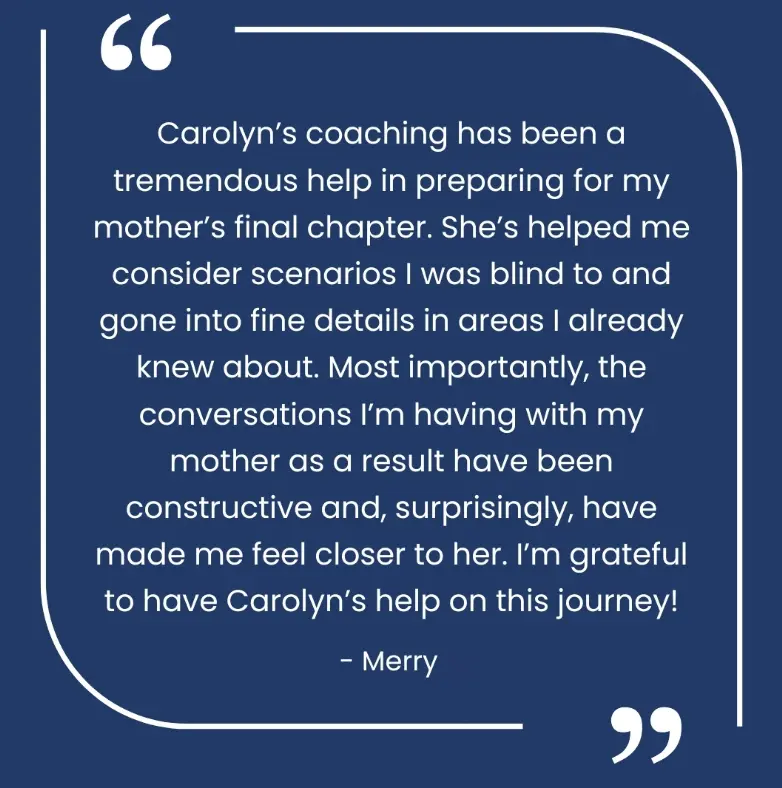
One client came to me knowing she needed to address aging care planning for her parents, but feeling paralyzed by where to begin now that they had a terminal medical diagnosis. Every step felt emotionally loaded. We slowed the process down, identified what mattered most right now, and created a simple structure to hold the work. As progress built, her anxiety decreased. What once felt overwhelming became manageable.
That sense of relief is common when structure replaces avoidance.
Why This Approach Works
Aging care planning works best when it is paced, contained, and supported.
This work lives within a broader execution framework. You choose the pace and level of engagement. My role is to help you keep moving forward without pressure, panic, or avoidance. When life shifts, we adjust without losing clarity or progress.
The result is not just preparation. It is peace of mind.
Start With a Day One Strategy Session
If aging care planning has been sitting in the back of your mind, the starting point is a Day One Strategy Session.
In this session, we clarify what needs attention, identify where things are getting stuck, and design clean first steps you can follow through on without overwhelm. If it’s a fit, we’ll choose the right commitment horizon and type of support to help you move forward with confidence and steadiness.